
Background
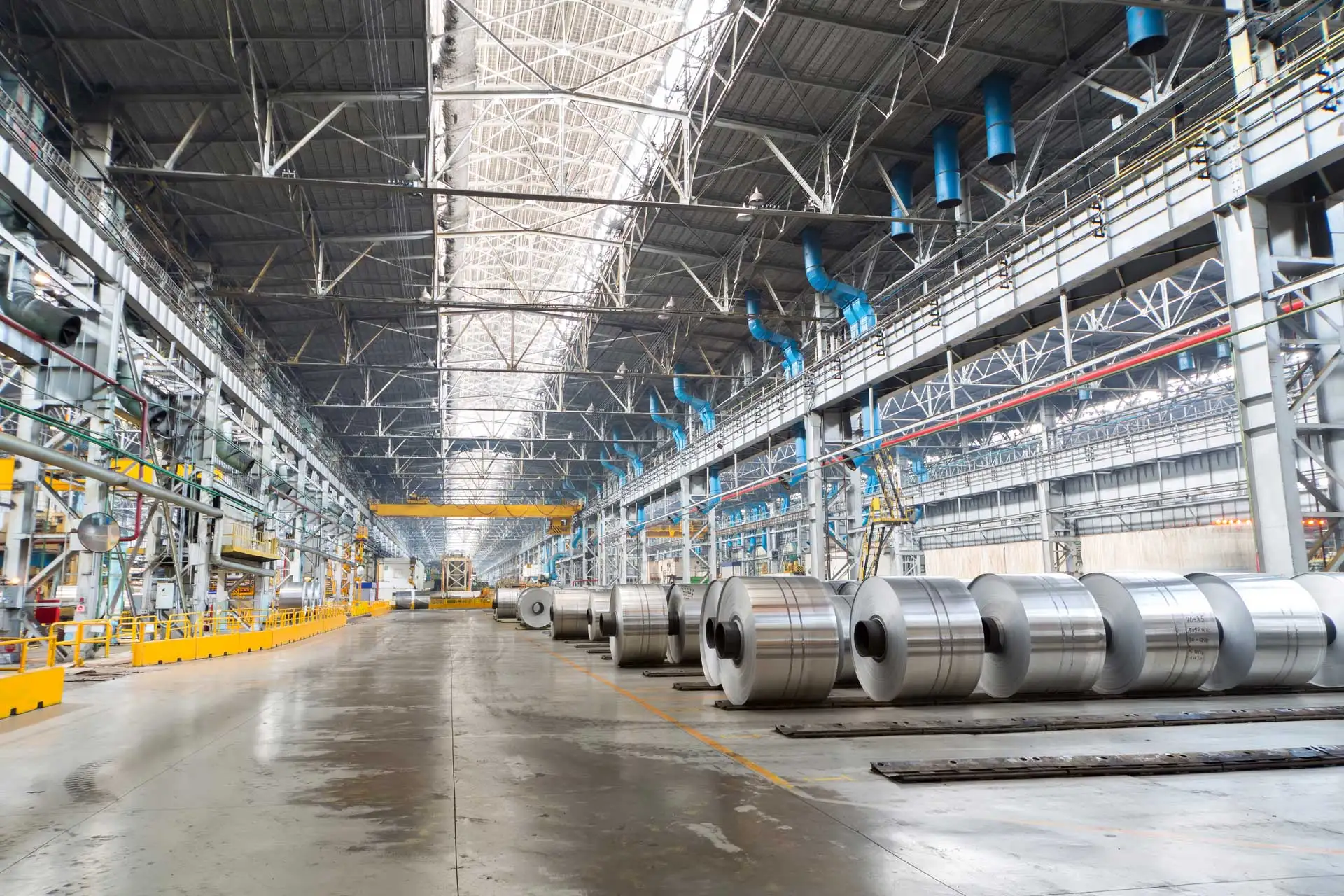
The product shipping area at POSCO Pohang Steelworks is widely distributed across the works. In this area, large overhead cranes are in continuous operation to transfer finished steel products.
There are cases where personnel need to enter crane operating zones in order to inspect specific equipment or check and repair crane operating conditions. The issue is that a crane in operation is itself a potentially fatal hazard to workers.
For this reason, the area is classified as a Level 1 zone. A Level 1 zone is a high-risk area where rotating or operating equipment exists inside the zone, and all internal equipment must be brought to a complete stop before personnel are allowed to enter. In the past, this control was managed through various sensors and interlock devices, but there were limitations in consistently verifying entry qualification and tracking the full procedure in an integrated manner.
To address this issue, a project was initiated to link Smart ILS with the crane operation system in order to ensure more reliable access control and consistent traceability throughout the entire procedure.
Challenges
The core challenge of this project was to integrate two different systems without error.
The lock and unlock events of the Smart ILS system had to operate in exact coordination with the automatic crane run and stop commands of the crane operation system. In addition, various site conditions such as dust, vibration, and temperature, as well as communication variables such as dead zones and signal interference, made the design especially demanding. A key issue was how to ensure fail-safe operation whenever signals between the two systems were delayed or lost.
Because even a single malfunction could directly affect worker safety, procedural accuracy and system reliability were the most critical requirements.
Solution — Establishing a Step-by-Step Integrated Workflow
After considering these variables, the following step-by-step integrated workflow was established.
1) Access request
When a worker submits a request to enter the area through the mobile app, the access request is immediately displayed on the HMI (Human Machine Interface) screen in the crane operator cabin. The operator checks the current crane status and brings the crane to a safe stop.
2) Crane stop confirmation and approval request
Once the crane has come to a complete stop, the system detects this condition and automatically sends an approval request to the authorized approver. The lock remains closed until the approver reviews the status and grants approval.
3) Lock release and entry
When the approver completes the approval, lock release authorization is activated on the worker’s smartphone. The worker unlocks the lock through the app and then enters the area.
4) Exit and crane restart
After the work is completed, the exit procedure follows the reverse order of entry. When the worker confirms exit and locks the lock again, the system detects this and automatically transitions to the crane restart approval procedure.
All of these procedures are monitored in real time from the control room, and the history of each step is recorded automatically.
Results
This project delivered meaningful results in several respects.
It moved beyond the limits of sensor-only control.
Conventional sensor-based control could detect whether equipment had stopped, but it had no practical way to verify whether the right person with the proper qualification had entered the area by following the prescribed procedure. Smart ILS integrates and centrally controls the entire workflow as a single operational sequence: entrant qualification verification (Right Person), equipment stop and interlock confirmation, lock release and entry, work completion and exit, relocking, and equipment restart.
It was the first case of controlling a Level 1 zone with Smart ILS.
This was the first implementation in Korea to replace a dispersed sensor-based control scheme with a single Smart ILS platform for integrated control of a Level 1 high-risk area. It can serve as a standard model for future application to similar high-risk zones.
It structurally eliminated accident factors.
Because the process is designed so that the next step cannot proceed unless the previous step has been properly completed, the system blocks accident risks caused by administrative error or unauthorized worker action at the system level.
© Jiwootech Co., Ltd. — This case study is based on actual field operating experience.